
 At Resilience in the Age of AI, a roundtable chaired by Anthony St. John, Lord St. John of Bletso, senior leaders from defence, financial services, research, energy, retail and mining sat down to answer one question: what does resilience mean when AI sets the pace?
The short answer was that you can’t protect everything any more. So, you’d better know what matters most, and how quickly you can get it back.
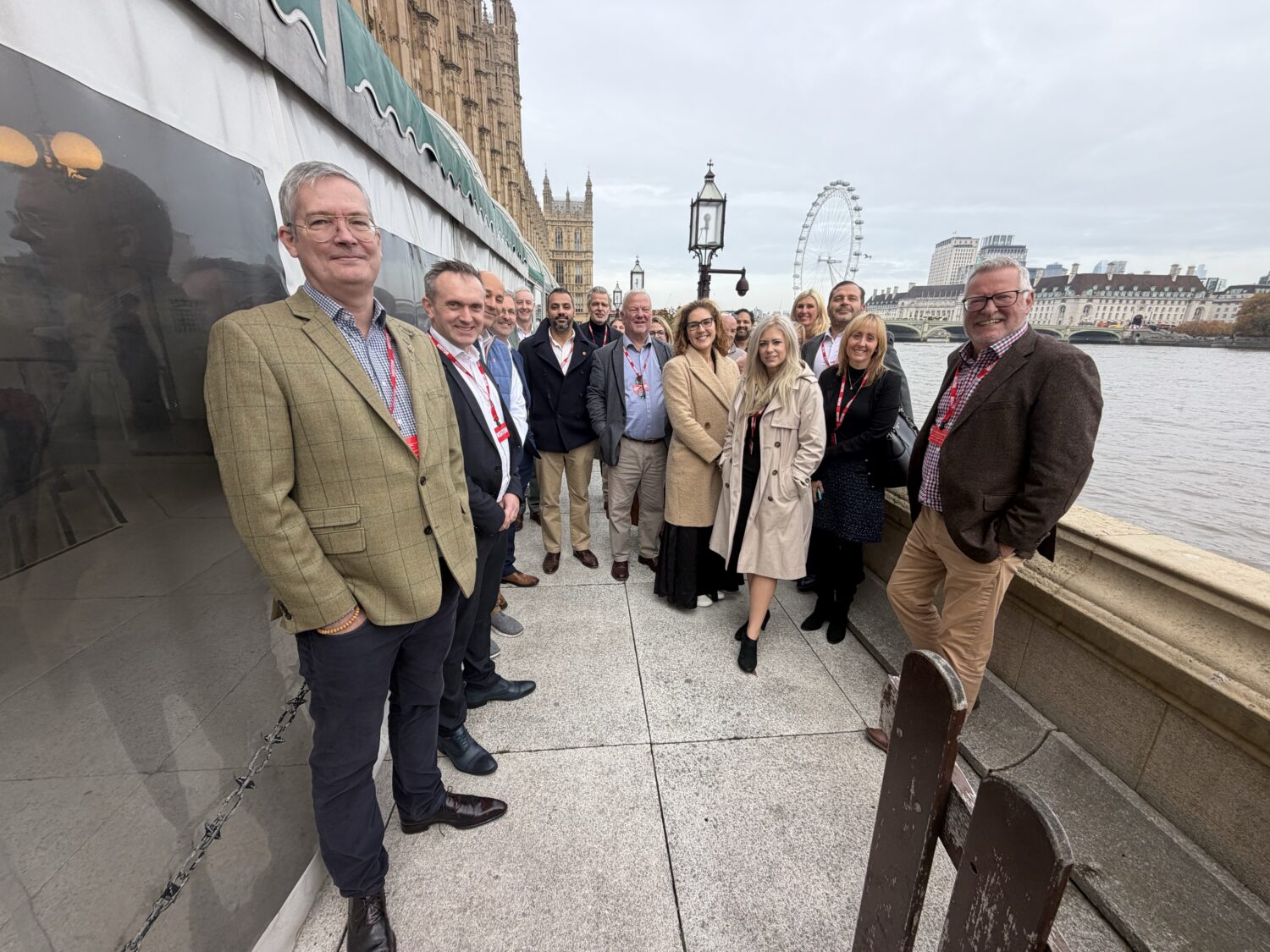
On Tuesday 10th November 2026, 13 senior leaders met at the House of Lords for Resilience in the Age of AI. The session was chaired by Anthony St. John, Lord St. John of Bletso, and co-chaired by Baroness Mobarik and Nigel Kilpatrick, Chief Revenue Officer of Roc Technologies. It ran under Chatham House rule, so apart form our chair and co-chairs, we’re sharing what was said, not who said it.
The question posed on the day sounded simple – What does resilience mean now? But as the say went on, conversation kept coming back to the same uncomfortable idea: most of the old playbook was simply written for a slower world.
Behind all three are determined malicious attackers, from state-linked groups targeting defence to criminal gangs moving on to councils and smaller organisations. The result, if it goes wrong, is the thing every leader in the room fears most: the services you rely on stopping and not knowing how quickly you can bring them back.
The session opened with an assessment of the scale of the threat to UK defence. It’s large and growing. The Ministry of Defence said in early 2025 that UK military networks had faced more than 90,000 cyber-attacks over the previous two years (GOV.UK, February 2025). Attacks on councils and smaller organisations are rising too, and many SMEs, it was pointed out, lean on insurance rather than practical defences.
Then the lens widened. The UK relies heavily on overseas supply for medicines and food, and that’s a resilience question as much as any server is. It set the tone for the rest of the session: resilience is about keeping essential things working, whatever goes wrong.
When the discussion opened, the first thing people agreed on was that business continuity had changed. It used to mean restoring systems to a known point and getting the business running again.
That model struggles against the threat above. When a flaw in widely used software can be exploited within days, and hits many organisations at once, restoring last week’s backup doesn’t tell you whether you’re safe to switch back on. Patching on a normal cycle, the room felt, simply can’t keep up.
If you can’t protect everything, what must you protect? This became the thread running through the whole session.
Leaders described starting with a short, agreed list of the services the organisation can’t operate without, and the data those services depend on. Several talked about moving from vulnerability management to exposure management: ranking weaknesses by what the business depends on and fixing those first.
An energy-sector leader put the test plainly: can you rebuild as fast as you can fix? Others described running worst-case simulations to find out, and keeping critical data separate so it can be restored quickly. Data was called the most valuable asset in the room, and the measure that mattered was how fast you get it back.
When talk turned to AI, the mood shifted. A retail leader described AI as now running processes rather than supporting the people who actually run them, at volumes in the hundreds of millions of transactions. In some cases, the machine is now preferred to the human. A human in the loop still matters, but nobody can keep pace with that.
Financial services leaders were more cautious. They saw AI agents as unpredictable (‘digital toddlers’, as one attendee put it) and were clear that agents shouldn’t be handed the authority to run banking. Their open problem was how to give agents some autonomy while maintaining guardrails throughout the whole lifecycle. Regulation, including the EU AI Act’s risk-based approach, is pushing them to tighten governance.
And then the provocation that stayed with people: should AI agents appear on the organisation chart, as non-human staff, with the same questions about access, accountability and oversight?
If AI as an operator was one worry, AI nobody had approved was another. Some organisations give staff AI tools and some don’t, but the room was fairly sure people use them either way, often through the browser. The idea that staff will simply be ‘risk aware’ got short shrift.
People also described estates with too many tools and patchy governance, where AI assistants can be switched on without anyone knowing how well the data underneath is segmented. Several pointed out that an enterprise licence doesn’t, on it’s own, tell you where your data is stored or processed.
Suppliers came up more than once. Organisations are now asking AI and SaaS suppliers which AI they use with their data, and writing tighter terms into contracts. A mining-sector leader described a breach at a professional services partner, and the awkward question that followed: what contract information had gone with it?
Nigel Kilpatrick, Roc Technologies’ Chief Revenue Officer and one of the session’s co-chairs, then took the conversation somewhere different. Resilience, he said, is a word that has really come into its own. But most of the talk about it is about systems. Are we doing enough to ensure our employees are resilient too? And are they protected from the AI side of things, not just the technology they use?
It’s a fair challenge. Almost everything the room had discussed, from shadow AI to unpredictable agents, comes back to people: the tools they reach for, the shortcuts they take and the pressure they’re under. That opened up a frank discussion about whether this is a risk in its own right, or is already leading to a disengaged workforce. Fellow co-chair Baroness Mobarik spoke to that point. It’s hard to build resilience with people who don’t feel invested in where they work.
A research-sector leader described the job as enabling science while blocking what’s harmful. Security has to be built in for research data as well as for corporate data such as HR, and, in their view, traditional governance boards move too slowly for that.
The mining perspective was similar. Budget is easier to secure than it was ten years ago, but approvals have to move faster. Risk sits at every level, from nation-states and users to language models and kits spread across remote sites.
For financial service leaders, the hardest part is often internal. The gap between identifying a risk and funding the fix is too long, and it’s hard to demonstrate a return on cyber spend when success means nothing happens. It tends to be easier where the CISO reports straight to the board. The 2025 attacks that disrupted major UK retailers and halted production at a large car manufacturer were mentioned reminders of what’s at stake.
And budgets are a real problem in a second way. The same money has to help the organisation make the most of AI and protect it from the threats AI brings. How you strike that balance was one of the hardest questions of the session, and nobody claimed to have it solved.
The session ended with a simple question: how confident are you about what’s coming? The answers were mixed. Some had medium confidence. Others were confident but worries about how much compute and energy AI needs. A few were frankly pessimistic, citing geopolitics and a tough job market for younger people. One participant was openly excited and told his daughter to learn how AI tools and prompting work.
If there was a common thread however, it was this: AI amplifies the good and the bad alike, because of how fast it moves.
Overall, five things stayed with us following the session:
None of that needs a big programme to get started. It needs a straight conversation with your leadership team. So, we’ve turned what we heard into six questions for you. If you can answer all six with confidence, you’re in a strong position. If you can’t, you’ve found where to start.
Download our short leadership guide with the six questions senior leaders are asking, or talk to our Cyber team about a Cyber Readiness Assessment.
Download the guideWhere do these insights come from?
These insights come from Resilience in the Age of AI, a roundtable held on Tuesday 10th November 2026m chaired by Lord St John of Bletso and co-chaired by Baroness Mobarik and Nigel Kilpatrick, Chief Revenue Officer of Roc Technologies. Senior leaders from defence, financial services, research, energy, retail and mining took part. Themes are shared without naming participants or their organisations.
What is the human side of cyber resilience?
The human side of cyber resilience means ensuring employees are engaged, supported, and protected from AI-driven threats, as well as securing systems. At the Resilience in the Age of AI roundtable, it came up alongside a wider discussion, which co-chair Baroness Mobarik spoke to, about whether AI is a risk to people or is already leading to a disengaged workforce.
What is the cyber threat from AI?
AI helps attackers find and exploit vulnerabilities faster. The NCSC says the time between a vulnerability being disclosed and exploited has shrunk to days and expects AI to shorten it further. Inside organisations, unapproved AI tools and AI agents add new routes for data to leak.
What is cyber resilience in the age of AI?
Cyber resilience in the age of AI is the ability to keep critical services running, and recover them quickly, when AI speeds up how fast vulnerabilities are found and exploited. It focuses on the minimum an organisation must protect rather than protecting everything equally.
What is the difference between vulnerability management and exposure management?
Vulnerability management works through a list of known flaws. Exposure management ranks those flaws by what the business depends on, so the fixes that protect critical services come first.
How should organisations govern AI agents?
Give AI agents the same scrutiny as staff: clear limits on what they can access and decide, a named owner, and written guardrails on where AI must not be used. Leaders at the roundtable also stressed keeping a human in the loop for high-impact decisions.
Does an enterprise AI licence keep me data in the UK?
Not necessarily. An enterprise AI licence doesn’t by itself guarantee where data is stored or processed, so check the supplier’s data residency terms and sub-processors.
At a House of Lords roundtable chaired by Lord St John of Bletso, senior leaders from defence, financial services, research, energy, retail and mining agreed on one thing: you can’t protect everything any more. Here’s what they’re doing instead, and six questions to take back to your team.

Universities spend considerable time and money preparing students for the workplace. At the same time, their own technology teams are struggling to find the capacity and skills needed to modernise. Is there an obvious solution?


The five-year strategy has been a familiar feature of corporate planning. But that model depends on confidence that the assumptions behind the plan will remain valid, and that confidence is becoming much harder to sustain.


It’s once the excitement has faded and the novelty of university has worn off, that the problems start to surface for students.


Deciding how much teaching should move online is not just about student preference, it’s about supporting students to learn in a way that works best for them. So how can universities build a digital strategy that works for all?

UCAS found that 71% of prospective students name making friends as their biggest worry about starting university – ahead of the academic side entirely.
Universities spend considerable time and money preparing students for the workplace. At the same time, their own technology teams are struggling to find the capacity and skills needed to modernise. Is there an obvious solution?
The five-year strategy has been a familiar feature of corporate planning. But that model depends on confidence that the assumptions behind the plan will remain valid, and that confidence is becoming much harder to sustain.
It’s once the excitement has faded and the novelty of university has worn off, that the problems start to surface for students.
Deciding how much teaching should move online is not just about student preference, it’s about supporting students to learn in a way that works best for them. So how can universities build a digital strategy that works for all?
UCAS found that 71% of prospective students name making friends as their biggest worry about starting university – ahead of the academic side entirely.

Universities put a huge amount of effort into creating the best possible experience for those young people – but what happens once they have accepted a place?

Every university investing in digital learning, modern campuses and new ways of teaching is, at the end of the day, trying to deliver an amazing student experience.

Organisations are now spending millions collecting information they may never use, storing data they don’t need, and creating risks they don’t fully understand. 68% of enterprise data is never used. 54% of it is never even accessed. We have to ask – has the data revolution has reached the point of diminishing returns?


Universities are fiercely, proudly distinctive. Their academic character, research strengths, student culture and civic relationships are not peripheral to what they do; they are central to the value they create. That distinctiveness has real weight: for students choosing where to study, for researchers deciding where to work, for employers seeking partners, and for the communities universities serve. In a sector where institutions are increasingly required to compete for students, funding, talent and reputation, protecting their differentiation is a strategic necessity.