

Routine operational work that used to be handled by junior engineers is increasingly carried out by intelligent systems. That work hasn’t disappeared, it’s just being done without human involvement.
On the surface, this is a productivity win. It reduces manual effort, speeds up service delivery, and removes arduous, repetitive tasks from the workload, allowing engineers to focus on more interesting challenges. But it also takes away the entry points where many engineers gained their first real experience.
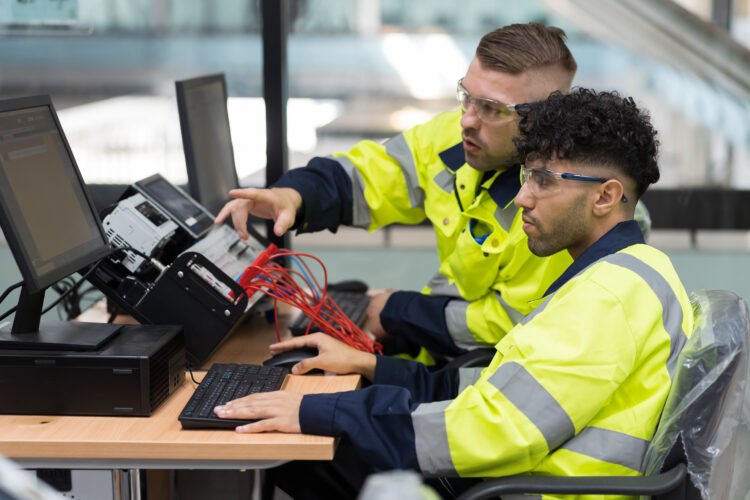
In the past, entry-level engineers built their skills through a steady flow of low-risk, hands-on work – analysing logs, applying patches, diagnosing simple faults, building test environments. These tasks were the proving ground for understanding how systems behave and how to fix them when they don’t.
Today, much of that is handled by automated processes. New starters often work entirely through management portals or automated workflows. They may never see the underlying configuration or be required to solve a problem from first principles.
If those early experiences are lost, the path to senior roles becomes harder to climb. You can’t develop deep understanding without having seen or contributed to the detail for yourself.
This shift creates a long-term risk: a shortage of engineers with the capability to take on complex, high-stakes work. Senior technical roles demand judgement that only comes from years of exposure to varied situations.
If junior engineers aren’t getting those experiences, fewer will have the depth to step up when needed. Over time, teams could find themselves with plenty of tool operators, but not enough engineers who can act independently, diagnose faults, and fix the tools themselves.
The traditional “support desk to senior engineer” route may no longer be realistic. Leaders need to think differently about how skills are built, and where early-career engineers can gain real-world experience.
Options include structured lab time, shadowing on major projects, and deliberate inclusion in problem-solving sessions. These aren’t a substitute for real incidents, but they can help maintain a flow of engineers who understand the systems they work on, developing their skills to become senior engineers and architects in the future.
The productivity gains from AI are real, but they come with a responsibility to plan for the future. Removing low-level tasks entirely from human hands may save time today, but it risks weakening the talent pipeline for tomorrow.
Organisations that consciously preserve opportunities for engineers to engage with the fundamentals will be better equipped to maintain technical resilience as automation advances.
Entry-level work isn’t just about getting things done – it’s where expertise is built. To go back to my earlier point, if we remove the need to understand the tools themselves, who fixes the tools when they break? And who troubleshoots incidents created by the tools? Without this basic training and experience, the future supply of skilled engineers is at risk. AI can make teams faster and leaner, but it shouldn’t strip out the learning stages that make long-term expertise possible.

Chief Technology Officer
Chelsea Chamberlin leads Roc’s Solution and Technology strategy, ensuring continual innovation and focussed partnerships which drive outcome based value for our customers. Chelsea’s background includes designing and delivering software and networking solutions within mission critical environments. Outside of work she is a green belt in Kick-boxing and mentor to young women paving careers in tech.

Over the past decade, the role of the university CIO has steadily evolved from infrastructure leader to strategic partner. But as collaboration across the sector becomes more structured and strategically important, that role is expanding again.


Collaboration has long been part of Higher Education’s institutional DNA. Universities share research infrastructure, co-author papers across continents and form networks of expertise that transcend borders. Knowledge has rarely been confined to a single institution.

For years, cyber security in higher education has been focussed primarily on data – institutional research, personal information and systems. Yet for university CIOs today, the more pressing issue is broader and, increasingly, more human.


End-of-support moments often trigger defensive thinking. Get compliant. Keep the lights on. Minimise disruption. These are valid concerns — but they don’t reflect the potential value on the table.


Partnerships sit at the heart of how most organisations now operate. Whether it’s suppliers, delivery partners, or internal teams, very little is achieved in isolation. Yet partnership is also one of the areas where good intentions often outpace good design.


The best kind of change is often the kind you don’t notice happening. Systems run smoother, processes feel easier, people stop sighing at their screens – and suddenly everything just works a little better.


True modernisation is less about speed – and more about substance. We talk about modernisation as if it’s a race – a finish line you can cross and then move on. It isn’t.


The modern enterprise has shifted beyond recognition.
Hybrid working is embedded, cloud adoption continues at pace, and data now moves across a range of devices, locations, and applications. As this digital footprint expands, the traditional network perimeter has dissolved.


AI has altered the physics of cybersecurity. Threats now move faster than policies can adapt, and defences evolve in real time. The traditional idea of resilience – static controls, periodic reviews, and defined perimeters – no longer fits.