
Part of the Bright Sparks series, written by Debby Dean, People Director


Whether or not he said it, the point stands. Organisations talk endlessly about change, yet so often repeat the same mistakes.
When major programmes fail, it’s rarely because the technology didn’t work or the process was wrong. It’s because the people inside the system were treated as an afterthought. Projects are planned around tools and timelines, not around the humans expected to adapt to them.
There’s also a pattern of looking outward more than inward. Leaders focus on customers, markets, and shareholders, but spend less time thinking about how to take their own people with them. It’s predictable — and frustrating — precisely because it’s so familiar.
Real change only happens when the people doing the work feel part of it. Leaving them out doesn’t just slow things down; it makes progress impossible.
Most people don’t actively dislike change. What they dislike is confusion. They resist when they feel uncertain, when they can’t see how decisions were made, or when they’re unclear about what’s expected of them.
That resistance is often misread as stubbornness, when it’s really information. The questions people ask — Why is this happening? What will it mean for me? How do I contribute? — are signals. They tell you where communication isn’t landing or where management confidence is thin.
The best leaders use those moments to listen before reacting. Not performative listening, but structured, serious engagement. Conversations in person, anonymous feedback, informal check-ins — different routes for different personalities.
The important thing is that the feedback loop stays open. People can accept difficult messages if they believe they’ve been heard and that their input has influenced the plan, even in small ways. It’s the silence that breeds resentment.
It’s also worth remembering that the loudest critics often care the most. Their frustration comes from believing the organisation can do better. Handle them with patience, and they can become some of the most committed supporters of the work.
No process, platform, or restructure succeeds without belief. People can cope with change — even painful change — if they understand why it’s necessary and how it connects to something they value.
That means communication has to start early, with honesty and clarity. Explaining what’s happening isn’t enough; people need to understand the reason behind it. A top-down announcement rarely does that. Real engagement happens when teams can discuss what the change means in the context of their day-to-day work.
Change that is explained carefully creates room for confidence. It allows people to make sense of what’s coming and to prepare themselves and others. When they understand their role in the process, they take it seriously. They don’t wait to be told what to do next.
Trust grows in small increments. It’s built through consistency, through keeping promises, and through admitting uncertainty when it exists. The absence of trust, by contrast, makes even minor adjustments feel threatening.
There’s a limit to how much change people can absorb. The more constant it becomes, the harder it is for anyone to stay focused. Fatigue sets in not because the work is too hard, but because it never seems to settle.
Acknowledging that reality isn’t indulgent — it’s practical. Managers need time and space to help their teams process what’s happening. They need access to simple materials, clear guidance, and enough breathing room to translate high-level plans into local action.
Training matters too, not just for new tools or systems, but for new habits and expectations. Skills take time to build. Rushing that process only stores up problems for later.
Some organisations have responded to disruption by cutting jobs and buying in new skills, assuming it’s faster than retraining. It’s a false economy. Investing in the people who already understand your customers, culture, and operations is almost always the better bet. It preserves knowledge, loyalty, and credibility.
The organisations that handle change best tend to move steadily rather than dramatically. They focus on getting people ready, not just on getting projects live.
Empathy is often described as a soft skill, but it’s closer to a technical one. It’s the ability to understand how people are likely to respond — not in theory, but in practice — and to plan accordingly.
When change is handled without empathy, it shows up as friction: missed deadlines, quiet disengagement, or unspoken frustration. When it’s handled well, things move more smoothly, not because everyone is happy, but because they feel respected and informed.
Leadership during change isn’t about motivating people with slogans. It’s about reducing uncertainty where you can and acknowledging it where you can’t. It’s about being present enough to listen, visible enough to answer questions, and consistent enough that people know where they stand.
Progress isn’t created by systems alone. It’s built by people who understand the purpose behind them and trust the intent of those leading the work.
When that trust exists, resistance eases, energy returns, and teams start to move together — not because they’ve been told to, but because it makes sense to.
That’s what real change looks like. No one left behind. Just people, doing difficult things well, because someone took the time to bring them with them.
Innovation isn’t just about the tech – it’s about people, and Debby is on hand to share her expertise.
Spark the conversation with Debby
Emerging technology has an irresistible pull. Every CIO knows the feeling: a new platform promises efficiency, a new algorithm claims intelligence, a new vendor insists you’re falling behind. The pressure to adopt can be immense — from boards, from peers, from the market itself.
Read now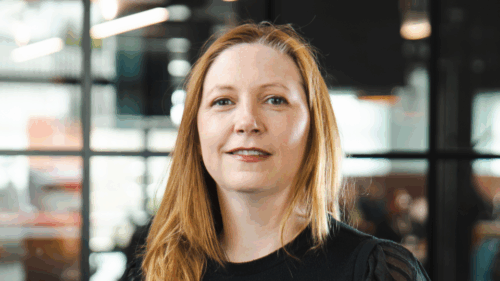
It’s often said that Albert Einstein defined insanity as doing the same thing repeatedly and expecting a different result. Whether or not he said it, the point stands. Organisations talk endlessly about change, yet so often repeat the same mistakes.
Read now
Progress shouldn’t feel this hard. Yet for many organisations, despite years of digital investment, transformation can feel like driving with the handbrake on. The ambition and tools are there but something unseen slows everything down.
Read now
True modernisation is less about speed – and more about substance. We talk about modernisation as if it’s a race – a finish line you can cross and then move on. It isn’t.
Read now
The best kind of change is often the kind you don’t notice happening. Systems run smoother, processes feel easier, people stop sighing at their screens – and suddenly everything just works a little better.
Read now
Partnerships sit at the heart of how most organisations now operate. Whether it’s suppliers, delivery partners, or internal teams, very little is achieved in isolation.
Read now
Chief People Officer
Debby Dean leads People and Culture at Roc. With 25 years experience across multiple industries including Private Equity, Defence and Construction, she is a passionate advocate for positive employee experience, career development and wellbeing. Away from Roc, Debby is an active member of her local theatre community working on over 50 theatre productions including at Minack, Edinburgh Fringe and the National Theatre.

Over the past decade, the role of the university CIO has steadily evolved from infrastructure leader to strategic partner. But as collaboration across the sector becomes more structured and strategically important, that role is expanding again.


Collaboration has long been part of Higher Education’s institutional DNA. Universities share research infrastructure, co-author papers across continents and form networks of expertise that transcend borders. Knowledge has rarely been confined to a single institution.

For years, cyber security in higher education has been focussed primarily on data – institutional research, personal information and systems. Yet for university CIOs today, the more pressing issue is broader and, increasingly, more human.


End-of-support moments often trigger defensive thinking. Get compliant. Keep the lights on. Minimise disruption. These are valid concerns — but they don’t reflect the potential value on the table.

Partnerships sit at the heart of how most organisations now operate. Whether it’s suppliers, delivery partners, or internal teams, very little is achieved in isolation. Yet partnership is also one of the areas where good intentions often outpace good design.

The best kind of change is often the kind you don’t notice happening. Systems run smoother, processes feel easier, people stop sighing at their screens – and suddenly everything just works a little better.

True modernisation is less about speed – and more about substance. We talk about modernisation as if it’s a race – a finish line you can cross and then move on. It isn’t.


The modern enterprise has shifted beyond recognition.
Hybrid working is embedded, cloud adoption continues at pace, and data now moves across a range of devices, locations, and applications. As this digital footprint expands, the traditional network perimeter has dissolved.


AI has altered the physics of cybersecurity. Threats now move faster than policies can adapt, and defences evolve in real time. The traditional idea of resilience – static controls, periodic reviews, and defined perimeters – no longer fits.